Related Articles
- Top 6 Little-Known Medical Apps with User Interfaces That Actually Boost Patient Outcomes
- 5 Game-Changing Fitness Trackers from the Last 5 Years That Outperform Your Expectations
- Top 8 Breakthrough Portable Diagnostic Devices from the Past Five Years Revolutionizing Home Health Testing
- The Quiet Influence of Ancient Medical Records on Modern Healthcare Data Interpretation and Policy Making
- Top 6 Emerging Medical Coding Analytics Platforms from the Last Five Years for Data-Driven Decision Making
- Examining the Impact of Quantum Computing on Future Remote Healthcare Data Defense Strategies
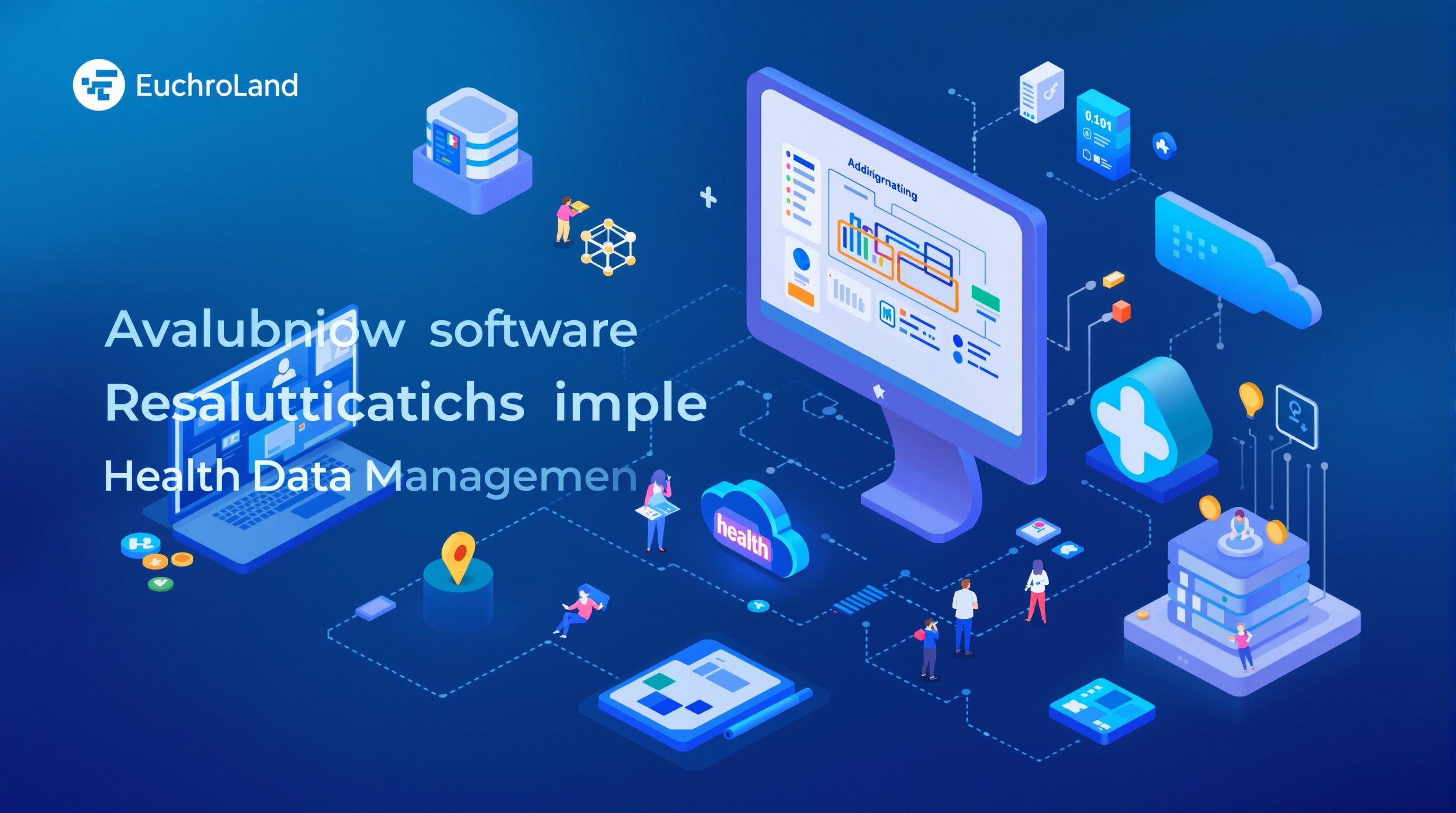
Top 7 Advanced Software Solutions Revolutionizing Health Data Management Since 2019: An In-Depth Review
Top 7 Advanced Software Solutions Revolutionizing Health Data Management Since 2019: An In-Depth Review
Top 7 Advanced Software Solutions Revolutionizing Health Data Management Since 2019: An In-Depth Review
Introduction
The rapid evolution of healthcare technology since 2019 has dramatically transformed how organizations manage health data. Advanced software solutions now facilitate secure, efficient, and scalable data management, critical for improving patient care and streamlining operations. These innovations address challenges such as data fragmentation, accessibility, privacy, and compliance with evolving regulatory standards.
Health data management today involves complex data types, including electronic health records (EHRs), imaging, genomic data, and real-time patient monitoring. Software solutions capable of integrating and intelligently analyzing these diverse data sources empower healthcare providers to make informed decisions swiftly. This review explores the top seven software systems that have revolutionized health data management landscapes since 2019.
Our selection criteria focused on innovations demonstrating significant clinical impact, adoption rates, compliance with data security standards such as HIPAA and GDPR, and integration capabilities. We also considered the systems’ support for emerging technologies like artificial intelligence (AI) and blockchain, which have become pivotal in recent years.
1. Epic Systems’ Health Data Platform
Epic Systems continues to be a dominant player in health information technology, enhancing its health data platform to support interoperability and patient engagement. Since 2019, Epic has introduced tools that better integrate data from various sources, including wearable devices and other third-party applications.
One notable advancement is Epic’s expanded use of Fast Healthcare Interoperability Resources (FHIR) standards, enabling seamless data exchange between disparate systems. This promotes a more holistic view of patient health, fostering coordinated care among providers.
Additionally, Epic’s MyChart patient portal has enhanced real-time access to medical records, lab results, and appointment scheduling, empowering patients as active participants in their healthcare journey. These capabilities align with healthcare trends emphasizing data-driven care and patient-centered approaches (Health IT News, 2021).
2. Cerner Millennium Platform
Cerner’s Millennium platform has undergone substantial upgrades integrating AI-driven analytics and robust data security features. Since 2019, it has prioritized predictive analytics to support preventive medicine and reduce hospital readmissions.
Through its HealtheIntent data platform, Cerner provides scalable population health management tools that process vast troves of health data in real-time. These insights help healthcare organizations tailor interventions to at-risk populations while maintaining compliance with data protection regulations.
The platform's commitment to interoperability is augmented by partnerships with cloud providers like Amazon Web Services, improving data accessibility and system scalability. This shift to cloud-based solutions has been a trend accelerating post-2019, underpinning modern health data ecosystems (Journal of Healthcare Informatics Research, 2020).
3. Allscripts Sunrise EHR
Allscripts Sunrise has made strides in integrating customizable EHR workflows with advanced clinical decision support tools since 2019. The platform emphasizes usability and adaptability, allowing healthcare providers to optimize documentation and enhance care coordination.
Key innovations include integrated natural language processing (NLP) features that automatically extract actionable insights from clinician notes, reducing documentation burden and improving data quality. This capability advances health data management by transforming unstructured data into structured, analyzable information.
Furthermore, Allscripts prioritizes secure data sharing via blockchain technology, improving auditability and traceability in health data exchanges. These efforts reflect a growing trend toward leveraging decentralized ledgers for healthcare data integrity and patient privacy (Frontiers in Digital Health, 2022).
4. Google Cloud Healthcare API
Google’s Cloud Healthcare API has emerged as a powerful tool for integrating, storing, and analyzing diverse health data sets. Since its release, the API supports multiple healthcare data standards including HL7, FHIR, and DICOM, facilitating interoperability across systems.
The integration of AI and machine learning (ML) capabilities within Google Cloud allows healthcare organizations to derive predictive insights from complex medical data. This substantially improves diagnostic speed and accuracy, elevating patient outcomes.
Security features such as data encryption at rest and in transit, along with compliance certificates like HIPAA and HITECH, ensure the protection of sensitive patient information. Google Cloud’s scalable infrastructure supports the growing demand for big data analytics in health research and operational workflows (Google Cloud Blog, 2021).
5. IBM Watson Health
IBM Watson Health leverages AI to revolutionize health data analytics, focusing on oncology, genomics, and chronic disease management. Since 2019, Watson’s capabilities have expanded to include enhanced cognitive computing models that analyze vast quantities of unstructured medical data.
The platform offers precision medicine tools that integrate patient histories with biomedical research, enabling personalized treatment plans. This use of real-world data analytics fosters innovation in clinical trials and drug development processes.
IBM Watson also emphasizes data security and compliance through advanced encryption and access controls. Despite some criticism over adoption hurdles, Watson's AI-driven health data solutions have made significant contributions to data-driven care paradigms (Nature Medicine, 2020).
6. Philips HealthSuite Digital Platform
Philips HealthSuite focuses on connected care solutions, enabling real-time health data collection from IoT devices and clinical systems. Since 2019, it has enhanced its platform's capabilities to support remote patient monitoring and telehealth services, critical in the context of the COVID-19 pandemic.
The platform integrates advanced analytics to interpret multi-source data streams, supporting early detection and intervention strategies. Its open architecture facilitates integration with third-party applications, promoting ecosystem expansion.
Moreover, HealthSuite emphasizes compliance with global health data standards and implements rigorous cybersecurity measures to protect patient information. The platform’s adaptability to various healthcare settings underscores its role in modern health data management (Philips Annual Report, 2022).
7. Oracle Health Sciences Cloud
Oracle’s Health Sciences Cloud offers a comprehensive suite tailored for clinical research and healthcare operations. Since 2019, Oracle has innovated its data management capabilities to enhance clinical trial data integrity and accelerate regulatory submissions.
The cloud solution provides real-time data analytics and visualization tools, facilitating faster insights and decision-making. Its robust data governance frameworks ensure compliance with international standards such as GDPR and 21 CFR Part 11.
Oracle also supports interoperability with EHRs and other health IT systems, enabling seamless integration of clinical and operational data. The platform’s scalability aids organizations in managing growing data volumes effectively (Oracle Whitepaper, 2021).
Emerging Trends in Health Data Management
Beyond specific software platforms, several trends have influenced the evolution of health data management since 2019. Firstly, the adoption of AI and machine learning across software solutions has increased, empowering predictive analytics and personalized care models.
Secondly, interoperability remains a critical focus, with FHIR standards becoming widely adopted to promote seamless data exchange between heterogeneous health systems. This standardization enables collaborative care and data sharing across institutions.
Finally, security and privacy have become paramount, driving the adoption of advanced encryption, blockchain, and zero-trust frameworks to protect sensitive health information. These trends collectively enhance the efficiency, accuracy, and security of health data management.
Conclusion
Since 2019, these top seven advanced software solutions have significantly shaped the health data management landscape, addressing challenges of interoperability, analytics, security, and patient empowerment. Their continuous innovation supports healthcare organizations as they navigate increasingly complex data environments.
The integration of AI, cloud technologies, and blockchain has elevated data management from simple storage systems to intelligent platforms driving clinical excellence. As health data volumes grow and regulatory demands tighten, these solutions will remain vital in delivering high-quality, personalized care.
Ongoing research and development, coupled with wide-scale adoption of best practices, promise further advancements in health data software solutions. Healthcare stakeholders must stay informed and engaged to leverage these tools effectively for improved patient outcomes and operational success.
Read More